

The Karen EDGE Fellowship Program will not accept applications during the 2026-2027 academic year.

Design by Tarah Paul, Tai-Danae Bradley, and John de Pillis
The EDGE Foundation has received an extraordinary gift from Abel Prize winner, Karen Uhlenbeck. Her generous gift is being used to establish The Karen EDGE Fellowship Program to support and enhance the research programs and collaborations of mid-career mathematicians who are members of an underrepresented minority group. Fellows will be chosen by a selection committee consisting of mathematicians appointed by the EDGE Foundation Board.
Eligibility:
Fellowships are available to mid-career mathematicians employed in full-time positions in the U.S. Applicants must be U.S. citizens or permanent residents with a Ph.D. or equivalent who are underrepresented minorities. Mathematicians of any gender identity are eligible.
Funding:
The award consists of $8,000 per year for three years. Valid expenses include travel by the Fellow, the Fellow‘s graduate students, or the Fellow‘s collaborators for the purpose of advancing the proposed research project, scientific computing, supplies, books, and professional memberships. Teaching buyouts or salary supplements are not permitted.
Reporting Requirements:
An annual progress report and financial statement are expected annually within two months of the end of each academic year.
The application consists of the following:
• Personal Statement (1 page)
• Research Description (2 pages, not including references)
• Curriculum vitae (2 pages)
• Three-year plan for use of the Fellowship (1 page)
• Budget Outline (1 page)
• Current and pending funding support

Erica Graham
2026 Karen EDGE Fellow

Reginald McGee
2025 Karen EDGE Fellow
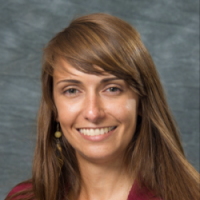
Mariana Smit Vega
2024 Karen EDGE Fellow

Henok Mawi
2023 Karen EDGE Fellow

Malena Español
2022 Karen EDGE Fellow

Manuel Rivera
2021 Karen EDGE Fellow

Emille Lawrence
2021 Karen EDGE Fellow

Bobby Wilson
2020 Karen EDGE Fellow

Pamela Harris
2020 Karen EDGE Fellow

Mohamed Omar
2020 Karen EDGE Fellow
One of Dr. Uhlenbeck’s advances in essence described the complex shapes of soap films not in a bubble bath but in abstract, high-dimensional curved spaces. In later work, she helped put a rigorous mathematical underpinning to techniques widely used by physicists in quantum field theory to describe fundamental interactions between particles and forces.
In the process, she helped pioneer a field known as geometric analysis, and she developed techniques now commonly used by many mathematicians.
“She did things nobody thought about doing,” said Sun-Yung Alice Chang, a mathematician at Princeton University who served on the five-member prize committee, “and after she did, she laid the foundations of a branch of mathematics.”
— Karen Uhlenbeck Is First Woman to Win Abel Prize for Mathematics, New York Times, 3/19/2019

Karen Uhlenbeck
Photo credit: Andrea Kane/Institute for Advanced Study


Design Credits: (L to R)
Tarah Paul, Tai-Danae Bradley, John de Pillis